Why I disabled skill endorsement on LinkedIn
Introduction
LinkedIn has a feature called skill endorsements: your connections can endorse the skills listed on your profile, giving them a sort of social proof. On paper it sounds like a good idea, the more endorsements you have for a skill, the more credible you look. In practice, however, I found it to be mostly noise. Here’s why I decided to disable it entirely.
Colleagues ask you to endorse them
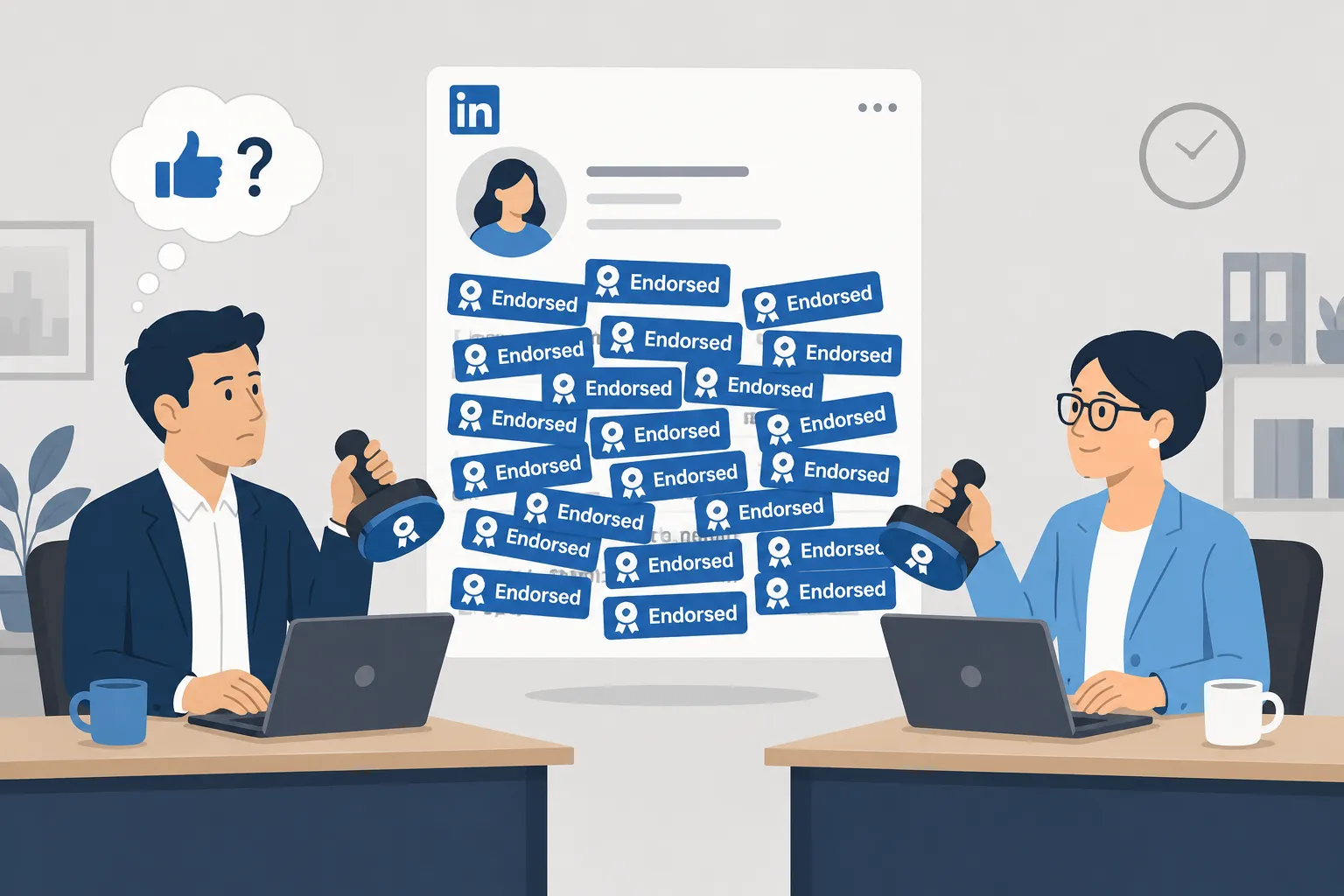
It starts innocently enough. A colleague asks you: “Hey, could you endorse me for JavaScript?”. You do it, you work together, it takes two seconds, no big deal. But then you think: maybe I should ask them to endorse me back. So you do. Then another colleague asks you, you ask them back. Before long it becomes an unspoken agreement. Everyone’s endorsement count goes up, everyone looks more credible on paper, but none of it means anything. That’s exactly the problem. Endorsements should reflect genuine, first-hand knowledge of someone’s skills, not a favour you exchange to make each other’s profiles look better.
Strangers endorse me
The weirdest part is receiving endorsements from people I have never worked with: someone I met during an interview or a connection I have never interacted with. How would they know? They actually don’t. They are not evaluating actual work. So an endorsement from a stranger does not add any new information, rather it adds noise.
When everything is endorsed, nothing is endorsed
Because people tend to endorse entire skill sections at once, all my skills end up with similar endorsement counts. If everything has 10+ endorsements, the number tells you nothing useful. Worse, LinkedIn sorts skills by endorsement count, so the skills that received the most random clicks bubble up to the top of my profile, regardless of what I actually consider my strongest points or want to highlight. In this way my profile no longer reflects my own top skills.
Conclusions
Skill endorsements seemed like a good idea but the incentives around them are wrong. They encourage people to ask for favours, reward quantity over quality, and ultimately move control of your own profile away from you. Disabling them was the good thing to do for me. If someone wants to know what I am good at, they can read my experience, look at my projects or read my unendorsed but honest skills list.